

A retail plaza manager calls in early October wanting a parking lot repaved before the holiday rush. A restaurant owner wants a patch job done without closing the lot on a Friday night. A property manager overseeing three commercial buildings needs all of them paved before the first snow, but none of them can be shut down at the same time. None of these are unusual requests. They’re the normal shape of commercial paving work once real business operations get factored into the schedule, and they all come down to the same underlying problem: asphalt has a narrow weather window, and business has its own calendar that rarely lines up with it.
In this article:
- Why Winter Sets a Hard Deadline on Asphalt Work
- The Business Calendar Problem Nobody Plans For Early Enough
- Phasing a Project So Operations Never Fully Stop
- Scheduling Around Peak Hours Instead of Around the Calendar
- What Gets Missed When Projects Are Rushed Into a Shrinking Window
- An Operator’s Take on the Requests That Go Wrong
- Building a Realistic Timeline Before You Call a Contractor
Why Winter Sets a Hard Deadline on Asphalt Work
Hot mix asphalt has to be placed and compacted while both the ambient air and the ground underneath it are warm enough to keep the mix workable. Once temperatures drop far enough for long enough, the mix cools before a crew can finish compacting it properly, which leaves weak spots that trap water and fail within a season instead of holding for years. That’s the reason paving contractors across Ontario push hard to finish exterior asphalt work before the ground locks up for winter, and it’s also the reason so many commercial projects get compressed into the same few weeks every fall.
That compression is the root of almost every scheduling conflict property owners run into. It’s not that contractors are disorganized. It’s that everyone with an outdoor surface that needs attention is trying to book the same narrowing calendar at once.
The Business Calendar Problem Nobody Plans For Early Enough
For most commercial properties, the tightest weather window for paving overlaps almost exactly with the busiest run-up to the holiday season. A retail plaza doesn’t want its main parking lot closed the same month shoppers start showing up in volume. A restaurant with a patio or a drive-through can’t afford a full closure on a weekend. A school or community building booked for holiday events can’t have its main entrance blocked off the week of a concert or a fundraiser.
The properties that get through this period smoothly are almost always the ones that started the conversation with a commercial and industrial paving contractor in late summer, not the ones who called once the lot was already visibly falling apart. Waiting until the damage forces the issue means fighting for a spot on a calendar that’s filling up with everyone else who waited too.
Phasing a Project So Operations Never Fully Stop
For most multi-tenant properties, the answer isn’t choosing between a full shutdown and no repair at all. It’s breaking the project into sections so only a portion of the lot or entrance is out of service at any given time. A few approaches that come up repeatedly on parking lot paving jobs:
- Splitting a large lot into zones and paving one zone at a time, so parking capacity and access never drop to zero
- Sequencing work so the busiest entrance or drive aisle is paved last, once the crew has a feel for how traffic actually moves through the property
- Coordinating with property management to reroute traffic and signage temporarily rather than closing the whole site
- Timing the noisiest or most disruptive phase, like milling or excavation, for the property’s lowest-traffic days rather than treating every phase the same
None of this is complicated, but it has to be decided before the crew shows up, not improvised on site once trucks are already blocking half the lot.
Scheduling Around Peak Hours Instead of Around the Calendar
Beyond phasing the physical space, a lot of commercial paving work gets scheduled around the clock rather than around the calendar. Early morning starts, evening work, or weekend timing can let a business stay open through its busiest hours while the actual paving happens when the lot would be quiet anyway. This matters most for retail, restaurants, and any property where foot traffic and vehicle traffic follow a predictable daily pattern. A grocery store parking lot that’s nearly empty at six in the morning is a very different scheduling problem than the same lot at noon on a Saturday.
The tradeoff is that off-hour and weekend scheduling needs to be booked further in advance, since crews and equipment have to be arranged around a specific window rather than a general week. Property owners who wait until the lot is already a liability tend to lose access to that flexibility, because the contractor’s remaining fall slots get filled with straightforward daytime jobs first.
What Gets Missed When Projects Are Rushed Into a Shrinking Window
When a project gets pushed to the very edge of the fall paving season, either because a decision got delayed or because a business kept postponing the closure, a few things reliably suffer. Curing time gets compressed, since cooler temperatures slow the rate at which fresh asphalt gains strength before it has to handle traffic again. Compaction quality can drop if a crew is racing daylight or racing a temperature drop rather than working at a normal pace. And any drainage or grading correction that should have been part of the scope sometimes gets skipped entirely, when it should really be handled as part of ongoing asphalt maintenance, just to get the surface course down before the window closes.
None of these shortcuts are things a reputable contractor wants to take, but a property owner who calls in November asking for a rush job before winter is, in effect, asking the crew to choose between doing it right and doing it at all.
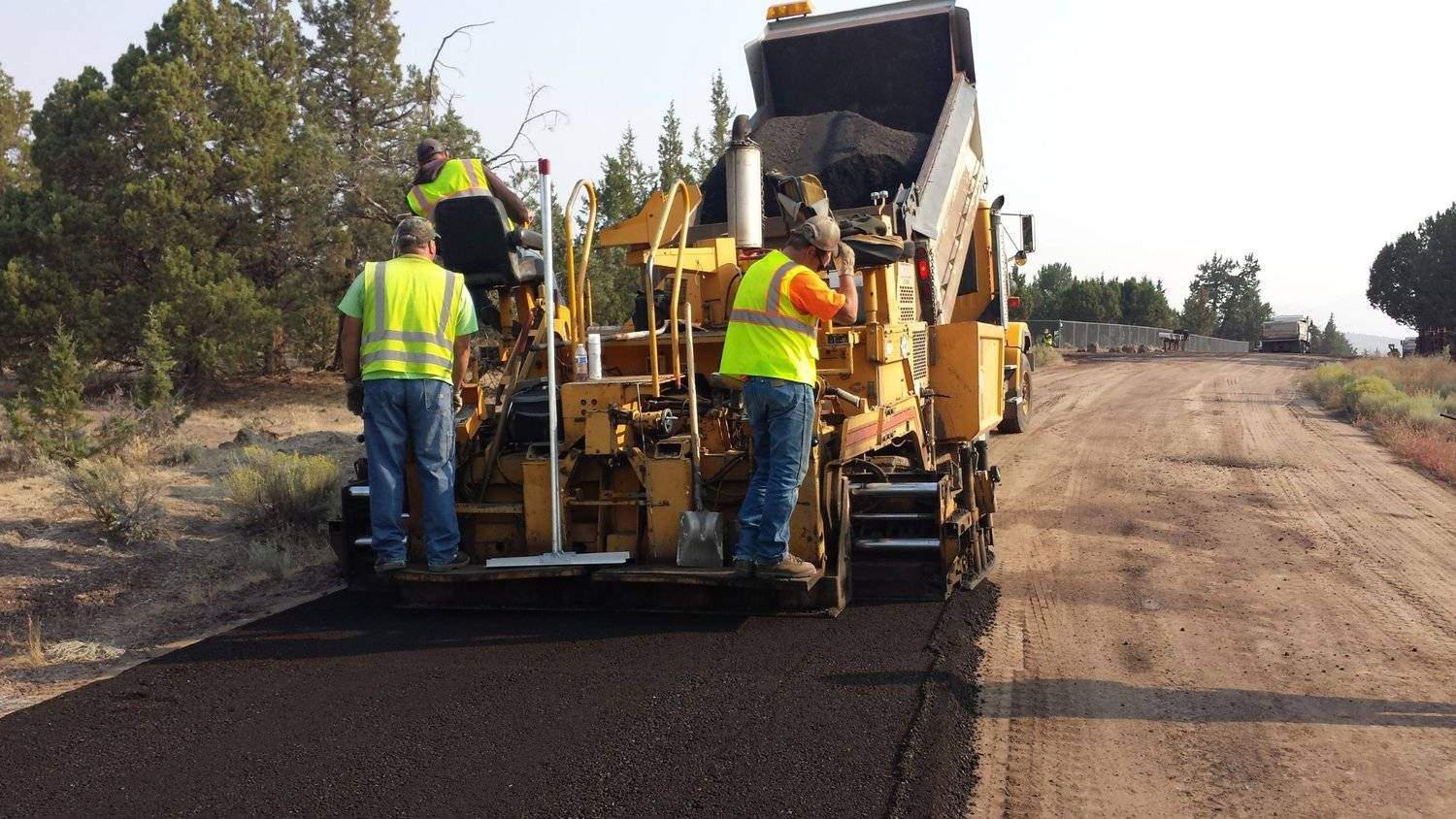
An Operator’s Take on the Requests That Go Wrong
As Mike, our operations lead at C. Aurora Paving, puts it: the projects that go smoothly almost always started with a phone call in August or September, while the ones that turn into a scramble usually started with someone hoping the cracks would hold one more season. He points out that the businesses who get the best outcome aren’t necessarily the ones with the biggest budget, they’re the ones who treat the fall paving window as a fixed deadline on their own calendar, the same way they’d treat a lease renewal or an inspection date, instead of something they can push back indefinitely.
His counterintuitive point is that closing part of a lot for two or three days in September almost always costs a business less in lost goodwill and lost parking than trying to avoid any closure at all and ending up with a full section failure mid-winter, when the lot can’t be touched until spring anyway. Avoiding a short planned disruption now often guarantees a longer unplanned one later.
Building a Realistic Timeline Before You Call a Contractor
Before reaching out for quotes, it helps to have answers ready for a few questions: which sections of the property genuinely cannot be closed at the same time, what days or hours see the least traffic, whether any tenants or events have fixed dates that can’t move, and how much flexibility exists if the weather window closes earlier than expected in a given year. Contractors can build a phased schedule around almost any set of constraints, but only if those constraints are on the table at the start of the conversation rather than discovered halfway through the project.
If your property has paving work that needs to happen before the ground freezes, the smartest move is starting that conversation now, while there’s still enough of the season left to plan phasing, off-hour work, and sequencing properly instead of reacting to whatever calendar is left. C. Aurora Paving has been planning commercial and municipal paving projects around real business operations across Durham Region and beyond since 1978, and a free, no-obligation assessment can map out a phased timeline that fits your property before the fall window closes. Call 905-435-0401 to get that conversation started.