

A school drop-off lane doesn’t look like it’s doing much damage. Cars roll through slowly, a bus idles for ten minutes, kids get out, everyone leaves. But that lane is quietly absorbing more stress than almost any other paved surface on the property, and most of it wasn’t designed for what it’s actually being asked to do.
We’ve walked onto more than one school property in Durham Region where the drop-off lane was resurfaced within the last five years and was already rutting, cracking at the edges, or pooling water at the curb line. In almost every case, the surface was built to standard driveway or light parking lot specs. Standard specs and drop-off zone reality are two very different things.
- What Makes Drop-Off Zones Different From a Driveway or Parking Aisle
- The Real Damage Mechanism: Idling, Turning, and Point Load
- What a Drop-Off Zone Actually Needs Underneath and On Top
- Ontario’s Freeze-Thaw Cycle Makes a Weak Spec Worse
- An Insider’s Take: Why “Just Resurface It” Rarely Fixes the Problem
- Signs Your Drop-Off Zone Is Already Failing
- Getting It Built Right the First Time
What Makes Drop-Off Zones Different From a Driveway or Parking Aisle
A residential driveway sees a car or two, a few times a day, moving at low speed in a fairly straight line. A parking lot aisle sees cars roll through and park, spreading the load across many stalls. A school drop-off lane sees something closer to a bus route condensed into one hundred metres of pavement, repeated twice a day, five days a week, ten months a year.
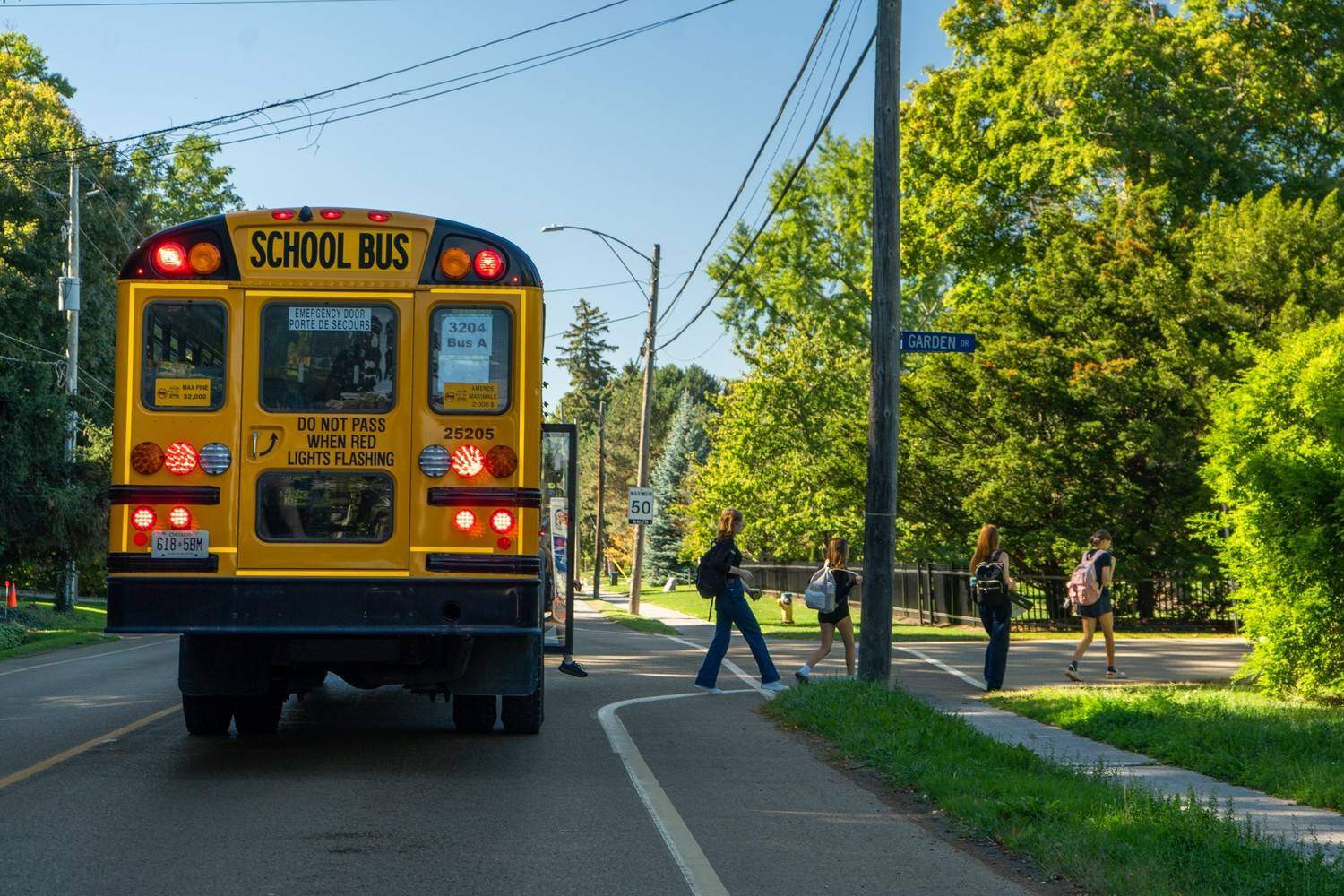
The vehicle mix matters as much as the volume. A standard school bus can weigh close to 13,600 kilograms fully loaded, and that weight isn’t distributed the way a passenger car’s is. Buses ride on fewer, wider tires carrying more load per axle, and they spend a lot of time doing exactly the kind of movement asphalt handles worst: slow turns, hard stops, and stationary idling in the same spot day after day.
The Real Damage Mechanism: Idling, Turning, and Point Load
Rolling traffic is relatively gentle on asphalt. The load moves, it’s distributed across a wide contact area over time, and the surface has a chance to recover between passes. Stopped or slow-turning traffic does the opposite. It concentrates load and shear stress in one spot for an extended period, which is exactly the loading pattern that causes rutting and shoving in a hot-mix surface.
A bus that idles in the same curb lane position every morning is essentially applying a static load cycle to the same few square metres of pavement, five days a week. Add in the tight-radius turns buses make pulling in and out of a queue, and you get lateral shear on top of vertical load. Standard 50mm surface courses designed for passenger vehicle traffic weren’t engineered to absorb that combination repeatedly without deforming.
This is also why crosswalk approaches and stop-line areas near schools tend to show wear patterns years before the rest of the lot, even when the whole area was paved at the same time. The load pattern, not the traffic count, drives the deterioration.
What a Drop-Off Zone Actually Needs Underneath and On Top
Most of the durability problem is decided before any asphalt goes down. A standard residential driveway base runs somewhere in the range of 150mm of granular material. A drop-off zone or bus lane built to hold up under repeated heavy axle loads and turning stress generally needs a granular base closer to 200 to 300mm, properly compacted in layers, not dumped and rolled once.
On top of that base, the surface course matters just as much as its thickness. Ontario Provincial Standard mixes like HL3 or HL8, with a higher asphalt cement content and a mix design suited to heavier loading, hold up to point load and turning stress far better than a lighter residential-grade mix. This is the same base and surface logic that goes into our commercial and municipal parking lot paving work across Durham Region, and it applies just as directly to a school’s drop-off lane. Surface lift thickness in a heavy-duty drop-off application typically runs higher than the 40 to 50mm you’d see on a driveway, specifically to resist the rutting caused by concentrated idling loads.
Drainage design is the other piece that gets missed. Drop-off lanes need enough cross-slope and curb detailing to move water away from the exact spots where vehicles sit stationary, because standing water under a static load accelerates subsurface saturation and speeds up freeze-thaw damage.
Ontario’s Freeze-Thaw Cycle Makes a Weak Spec Worse
Durham Region and the surrounding areas typically see dozens of freeze-thaw cycles over a winter, not just one long freeze. Each cycle, water that has worked its way into hairline cracks or a saturated base expands as it freezes and contracts as it thaws, widening whatever weakness already exists. A drop-off lane that’s already carrying rutting stress from bus traffic has more entry points for that water to begin with, so the freeze-thaw damage compounds faster than it would on a lightly used surface.
This is part of why a drop-off lane paved to residential specs can look fine in its first autumn and show real distress by its second or third spring. The underlying stress was already there. Winter just accelerates what the traffic pattern started.
An Insider’s Take: Why “Just Resurface It” Rarely Fixes the Problem
As Mike, our operations lead, puts it: most calls we get about a failing drop-off lane start with “can you just resurface it.” That’s usually the wrong first question. If the base underneath was never built for bus loading in the first place, a fresh surface course on top of it buys maybe two winters before the same rutting comes back in the same spots, because the problem was never the surface. It was always what’s underneath it.
The counterintuitive part is that spending more upfront on base depth and mix selection for a drop-off zone specifically, rather than treating it as an extension of the main parking lot, almost always costs less over a ten-year window than resurfacing the same failing lane every few years. Schools and school boards operating on tight capital budgets sometimes assume the cheaper spec now is the responsible choice. In a drop-off zone, it’s usually the opposite.
Signs Your Drop-Off Zone Is Already Failing
- Rutting or shallow depressions in the exact spots where buses stop and idle
- Alligator cracking concentrated near curb lines and turning radii, while the rest of the lot looks fine
- Standing water at the curb after rain, even on a lot with proper drainage elsewhere
- Edge cracking along the curb where vehicles repeatedly turn tight
- A resurfaced section that’s already showing the same wear pattern as before
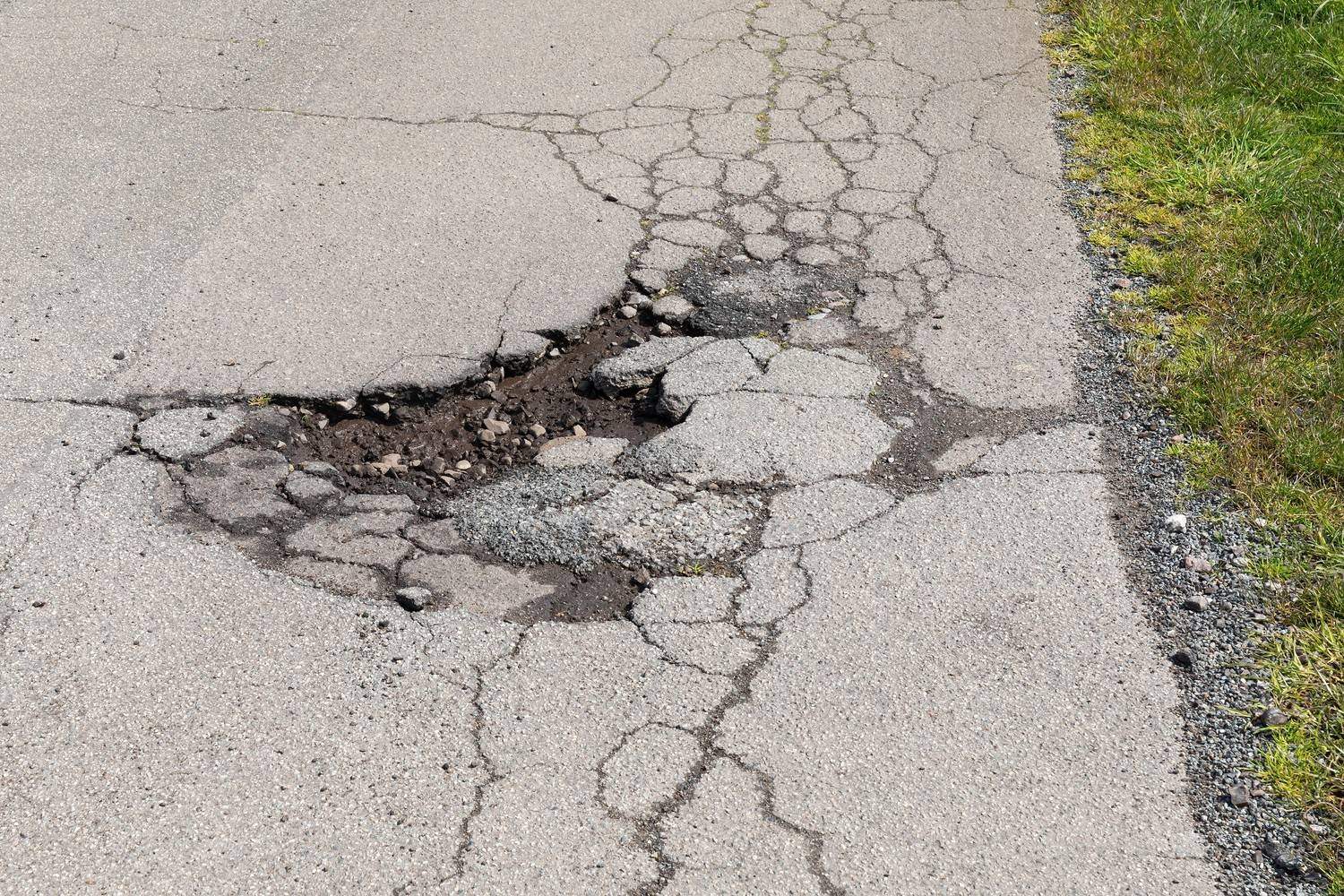
If more than one of these is showing up in the same lane, the issue is very likely the base and mix design rather than surface wear alone, and a straightforward resurface won’t hold. In cases where the base is still sound, asphalt maintenance and crack sealing can extend the life of the surface a few more seasons, but it’s worth confirming that first rather than assuming.
Getting It Built Right the First Time
A properly built drop-off zone starts with an honest look at the traffic it actually carries, not the traffic the rest of the parking lot sees. That means assessing bus frequency and dwell time, mapping where vehicles turn tightest, and designing the base depth, mix, and drainage around those specific stress points before anything gets paved. For schools weighing a resurface against a proper rebuild, that assessment is usually the step that determines which option actually holds up.
If your school’s drop-off lane is already showing rutting, edge cracking, or standing water at the curb, it’s worth having someone assess whether the issue is surface-level or something happening underneath before committing to another resurface. C. Aurora Paving has been building and rebuilding heavy-traffic surfaces across Durham Region and beyond since 1978, including paving services in Oshawa and neighbouring communities, and free, no-obligation estimates are available for school boards, facility managers, and property owners looking to get ahead of the next spring thaw.
Contact C. Aurora Paving for a free assessment of your school’s drop-off or bus loading zone.