

A retail plaza can fill before the first snowfall. Cars queue at the entrance, delivery trucks turn behind storefronts, and shoppers cross the same drive aisles with carts. A shallow dip that barely matters on a quiet day can hold water across the busiest walking route. Retail parking lot maintenance before the holiday rush starts with finding the places where pavement condition and site traffic meet. For a property manager, the first decision is which problems need attention now and which belong in a larger spring paving plan. We are a family-owned business serving Durham Region since 1978, fully bonded and insured.
Walk the routes, not just the parking stalls
Start at each driveway and follow the trip to the busiest storefronts. Drive through the aisles, park, and then walk from a stall to the doors. Repeat the route for a delivery truck, including the service entrance and turning area. The point is to see where shoppers, carts, vehicles and deliveries share limited space. A broken edge beside an unused row may be less pressing than a small depression where people step off a curb.
Visit during a busy period if safe. Note where cars pause for spaces, back into the main aisle, or queue for pickup. Mark rough pavement there on a lot sketch. Save a dated photo, precise location, and the effect on movement. Photograph ponding after rain from a safe position, away from moving traffic.
A useful note says, “loose asphalt at the west entrance where carts cross,” not simply “lot needs work.” That helps a contractor assess the area and the property team decide whether traffic needs a temporary route.
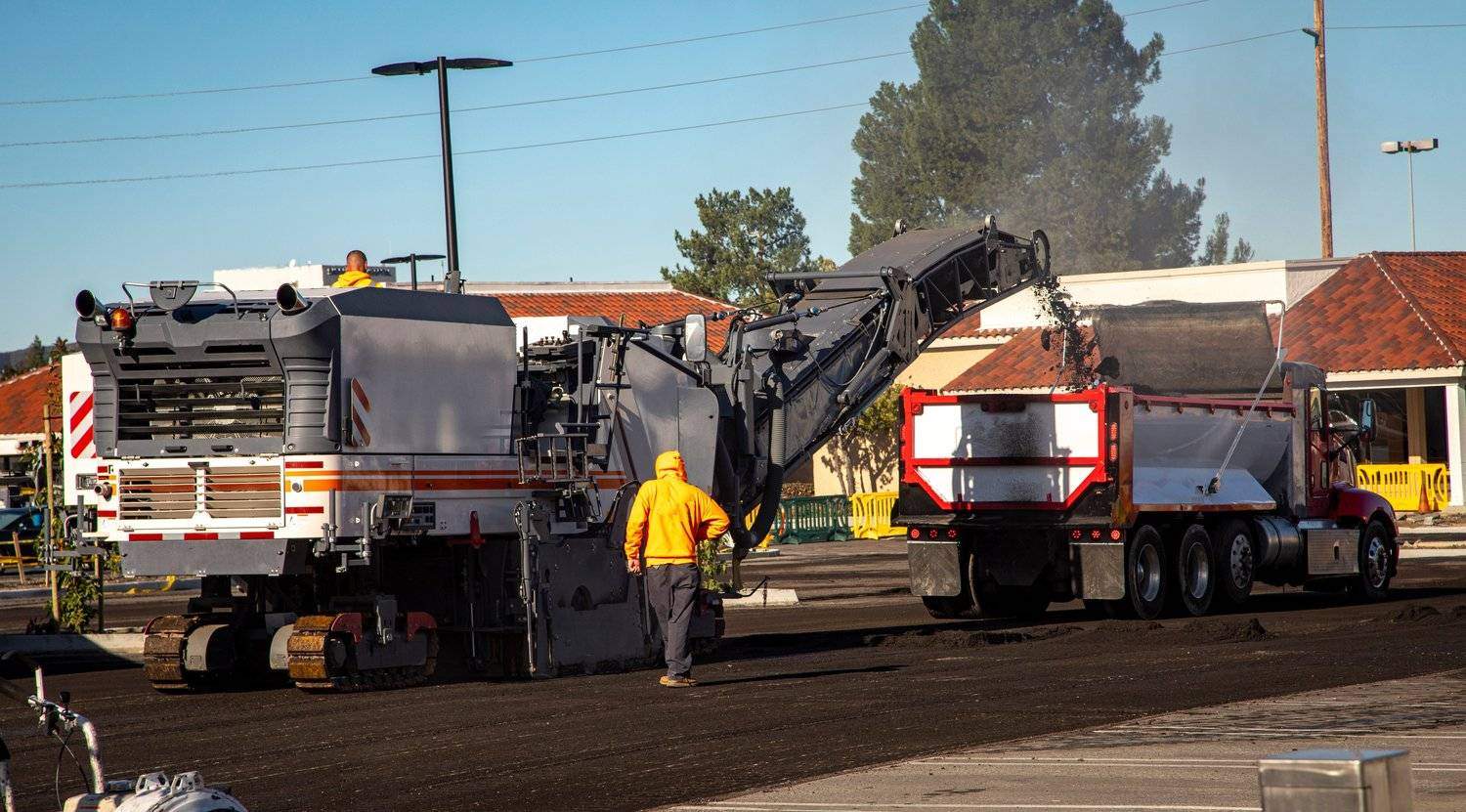
Repair the bottlenecks before planning a rebuild
Separate access problems from surface wear. A pothole at an aisle turn, loose pavement on a walking route, or a sunken area around a drain calls for prompt assessment. An older but usable row with faded asphalt may be better left open during the busiest shopping weeks. The location and effect of a defect matter more than how dark or fresh the pavement looks.
Use a short action list when asking for an assessment:
- Check the busiest routes: Find breaks, loose edges and depressions where customers, staff or delivery vehicles must pass.
- Look for repeat problems: A patch that sinks again or a spot that holds water may need investigation below the surface before another patch is specified.
- Map the work area: Identify stalls and lanes that could be closed without trapping parked cars or cutting off loading access.
- Plan the larger scope: Discuss widespread failures, drainage, weather and a workable construction season before proposing a full repave.
C. Aurora Paving’s asphalt repair services include pothole patching and repairs around storm drains. Describe what you see rather than prescribing a repair method from a photograph. A contractor can assess whether the surrounding material is stable and whether water is contributing to the problem. If durable work is impractical in current conditions, agree on an interim way to manage the affected route with the property team and plan permanent work for a suitable season. Do not leave a known problem unmarked while waiting for spring.
Call 905-435-0401, send photos and request a lot assessment to sort immediate access concerns from later work.
Keep water and snow storage off shared paths
The lowest point in a lot often sits close to a curb, crossing or catch basin. Rain that remains across a cart route makes a damaged surface harder to use; freezing weather can add another complication. Have the site team clear leaves and debris from visible drain covers where it can do so safely. A blocked grate and a broken basin surround are different problems. The former may be routine site care; the latter deserves a pavement assessment.
Put standing-water locations, proposed snow-storage areas and essential delivery routes on one sketch. If a snow pile would cover a grate or direct meltwater across the storefront crossing, ask the plowing provider to choose another location. Keep sightlines near driveways and crossings open. Where a drain repeatedly ponds despite a clear drain cover, ask whether the pavement grade or the drain needs closer inspection rather than assuming a surface coating will solve it.
The same review can identify maintenance worth discussing now or in warmer conditions. C. Aurora Paving offers asphalt maintenance, including crack sealing and line striping. Ask what is appropriate for the observed condition and the weather; do not schedule a coating solely because a holiday date is approaching.
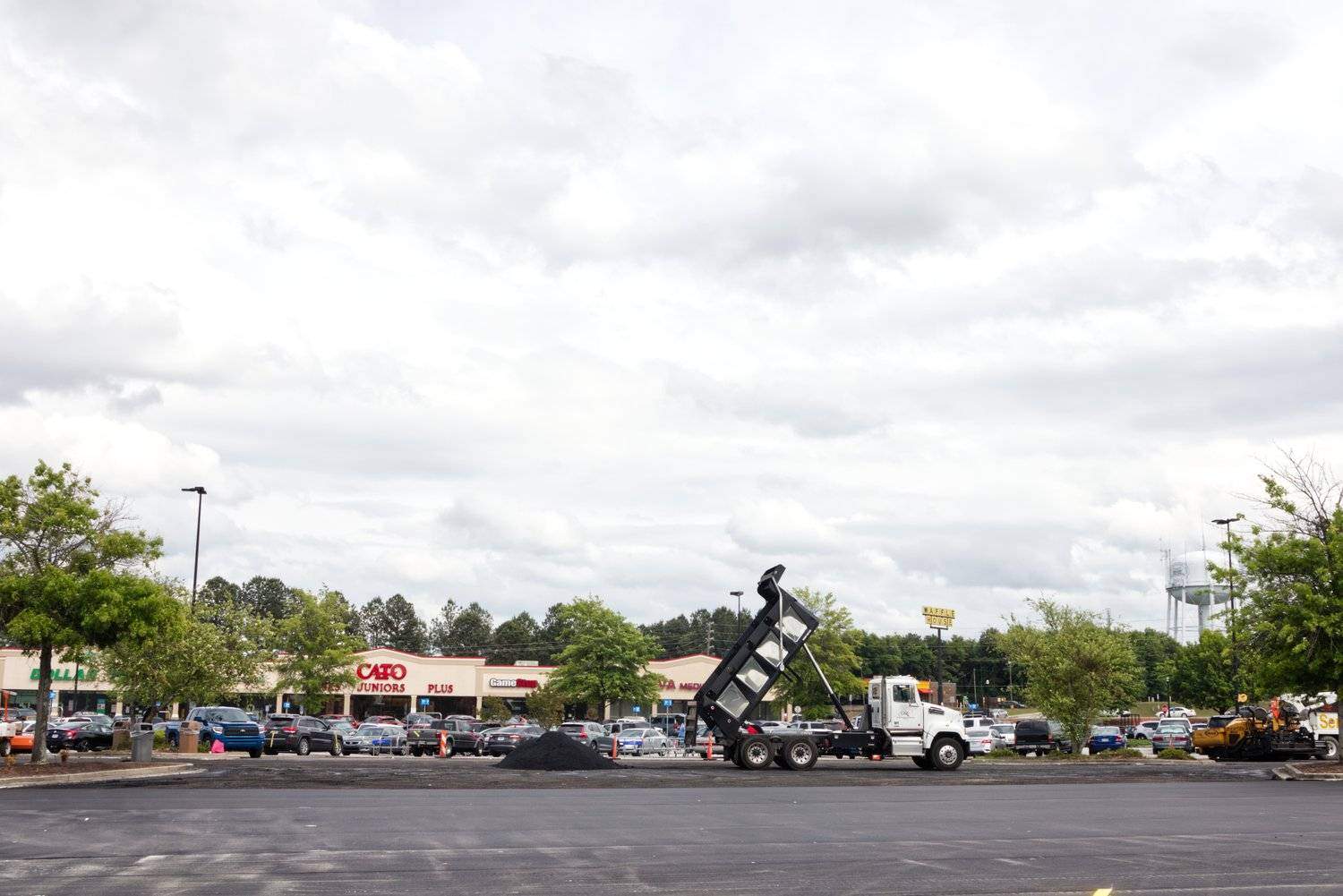
Make entrances and markings easy to read
In a nearly full lot, drivers slow down to scan for spaces, reverse beside pedestrians and sometimes turn through a gap that was never intended as an aisle. Walk the approach to each entrance and note where aisle direction, pedestrian crossings, accessible spaces and delivery access are hard to distinguish. Refreshing worn markings may help drivers understand the route, but paint cannot repair broken asphalt or create room for an oversized delivery vehicle. Decide which problem you actually have before booking work.
Check whether pickup queues or seasonal displays block an accessible space or walking path. Move them if they force people into a vehicle lane. Ontario’s public-space accessibility guidance addresses accessible parking when creating or redeveloping public off-street parking; a holiday walkthrough is not a compliance audit or an automatic retrofit requirement for an existing lot.
The counterintuitive choice may be to leave a serviceable row alone and spend the available time on one awkward crossing near the entrance. A newly resurfaced low-use corner does little for shoppers who still have to walk around a delivery truck. Focus the short pre-holiday window on keeping the most-used route open and understandable.
Fit work around deliveries and store hours
Before requesting a scope, ask tenants when their deliveries arrive, where employees park, when curbside pickup is busiest, and which entrances cannot close. Tell the contractor about overlapping uses, not only the asphalt defects. A plan for a small repair should identify the affected stalls and aisle, an alternate route, and the person who will notify tenants. If vehicles cannot be redirected without blocking a loading area, discuss a smaller work area or another window.
For larger parking lot paving, use the holiday inspection to prepare a future project rather than assuming a late-season start. The pavement condition, weather, staging space and traffic pattern all shape the sequence. Ask how each section would be isolated, where cars would park during the work, and how deliveries could continue. Do not promise tenants a reopening time before the contractor has assessed the site and agreed on the scope.
A short tenant notice needs only the confirmed work area, affected hours, alternate access, and a contact for changes. Share it after the plan is settled. If the proposed closure interferes with a major shopping day, reconsider the timing instead of expecting store staff to improvise directions at the barricades.
Carry the findings into winter and spring
A November review still has value when no major paving happens before the rush. Keep the marked sketch, dated photographs, ponding observations and notes on any temporary redirection together. Ask the winter maintenance provider to report new damage or recurring ice at the same spots. Revisit those locations when the pavement becomes visible in spring, and compare them with the original photos to see whether a patch or depression has changed.
Order the spring discussion by function: the delivery entrance everyone uses, a recurring drainage problem, failing patches in a busy aisle, then lower-use wear. An assessment may lead to a local repair, maintenance, or a larger paving proposal. Those options answer different questions, and the right scope depends on what is happening below and around the visible surface. The record lets a manager explain the work to tenants with more precision than “we will fix the lot.”
Request a holiday lot assessment
If a damaged walking route, ponding area or delivery conflict could disrupt holiday traffic, ask C. Aurora Paving what can be addressed now and what should be planned for a suitable paving season. Call 905-435-0401 and send photographs with the location and busiest hours. The family-owned company has served the Durham Region since 1978, is fully bonded and insured, and offers free estimates. Request a lot assessment that separates immediate access needs from longer-term work.